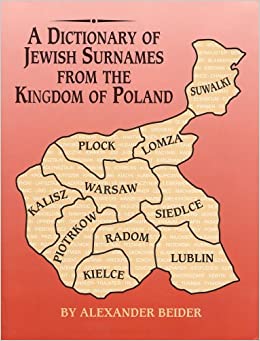
Polish Jewish Names The earliest historically confirmed news about the region, which today is the State of Poland, dates back to the 10 th century. At that time, and maybe already two centuries earlier, Jews came to Poland from Ukraine, from the Khazarian Empire — between the Black Sea and the Caspian Sea — and the Byzantium Empire. The emigration from Germany, especially from Franconia and the Rhine area, and from Bohemia — which took place from the 11 th century — influenced the language and the people's names. The Jews brought along, to Poland, the German language of that time, as well as the community organization typical of the German ones. The Yiddish language, still existing, was a combination of German dialect and Hebrew words. The Jews were engaged in this area in trade and money business, the trigger of the setting up of a local economy. The oldest Jewish communities in Poland in the 13 th and 14 th centuries were: Plozk, Kalisch, Krakau, Lemberg, Posna...


Comments
Post a Comment