Posts

German Names

Image
  10 Common German Surnames   Here are 10 of the most popular German surnames found around the world:   Becker: on the surface, it may seem obvious that the Becker’s were bakers by trade. However, there is strong evidence to support that Becker may also have identified a family as carpenter or toolmakers. Whatever the case may be, the Becker’s served an essential function in any German city.   Hoffmann: the peasant farmers of rural Germany would be the first to bear this occupational name, as they toiled on the hoff (farm). The name would later become a surname used for the farm owners, managers, and foremen, rather than the day-to-day workers in the fields.   Klein: a descriptive surname that means “small.” This would have been used to describe the original namesake’s physical stature. The popularity of the surname Klein paints an interesting and rather humorous picture of a small individual who, despite their size, made a large m...
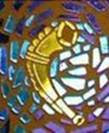
Why and When is the Shofar Sounded during Elul?

Image
  Why and When is the Shofar Sounded during Elul?                           Written by Rabbi Herbert J. Mandl, Rabbi Emeritus, Kehilath Israel Synagogue    Thursday, August 23 2012 08:36 QUESTION: I understand that at this time of year the shofar is blown every day at weekday morning services. I thought the shofar was just blown on Rosh Hashanah and at the end of Yom Kippur. Can you explain this tradition? ANSWER: There has been a tradition that is at least a thousand years old that the shofar is blown very briefly in daily weekday morning services for the entire month prior to Rosh Hashanah. The purpose of the shofar being blown is to remind people that the High Holy Days are approaching and that one should start thinking about repentance, spiritual repair of our souls and all that this holy season is all...

10 Yiddish Words That Went Mainstream

10 Yiddish Words That Went Mainstream Even as fewer American Jews spoke Yiddish at home, various Yiddish words and phrases were adopted into the American lexicon. BY   MJL When Ashkenazi Jews immigrated to the United States from Eastern Europe, they brought with them the  Yiddish language . Over time, fewer of them spoke Yiddish at home, but many Yiddish words and phrases came into use by Americans generally, both Jewish and not. Klutz : A clumsy or awkward person Origin : From the Yiddish word  klots,  meaning “wooden beam” Usage:  “I’m such a klutz I tripped over my own shoelaces.” Nosh : A light snack Origin : From the Yiddish  nashn , meaning “nibble” Usage:  “I’m not hungry enough for dinner, but I could go for a nosh.” Schmooze : To chat lightly Origin : From the Yiddish  shmuesn , meaning “conversation” Usage:  “Thanks for inviting me to Shabbat dinner, I loved schmoozing with your college fr...

Nostalgia 2

Image
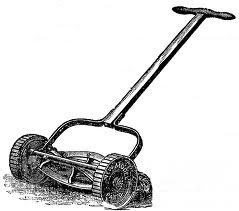
Lawn Mower Incandescent Light Bulb Water Closet Toilet  Vicks Vapo-Rub Whist Broom

From Biography of Herald Issadore Sharlin

His father, Hillel lived in Jerusalem soliciting money for organizations. He was observant pious but not ultra-pious as his son became. He traveled the New World for the promise of economic opportunity. Abraham Emanuel Sharlin 1856, born in Jerusalem, married Sophie rather from Bucharest, Romania. His family owned a bakery and he cleaned the shul. His Grandmother delivered milk Abraham’s grandchild initially travelled to France to work as a bookbinder for his brother-in-law, which did not work out. Next, he traveled to America, helped by a Jewish benefactor in England. He and his wife had three sons: Solomon, Jacob and Jeremiah. They also raised daughters – Freida, Chiya and Vitte. One died in France In 1892, Toby, a sister arrived in Trenton. She worked as a bookbinder and conducted Jewish fundraising. Sam Sharlin married and remarried. Altogether the Shalin’s numbered four sons: Dave, Hiller, Joe, Manny, Mickey. The family manufactured lightin...

Kohn-Azarchi Family Tree